“Therefore a man shall leave his father and mother and be joined to his wife, and they shall become one flesh.” (Genesis 2:24)
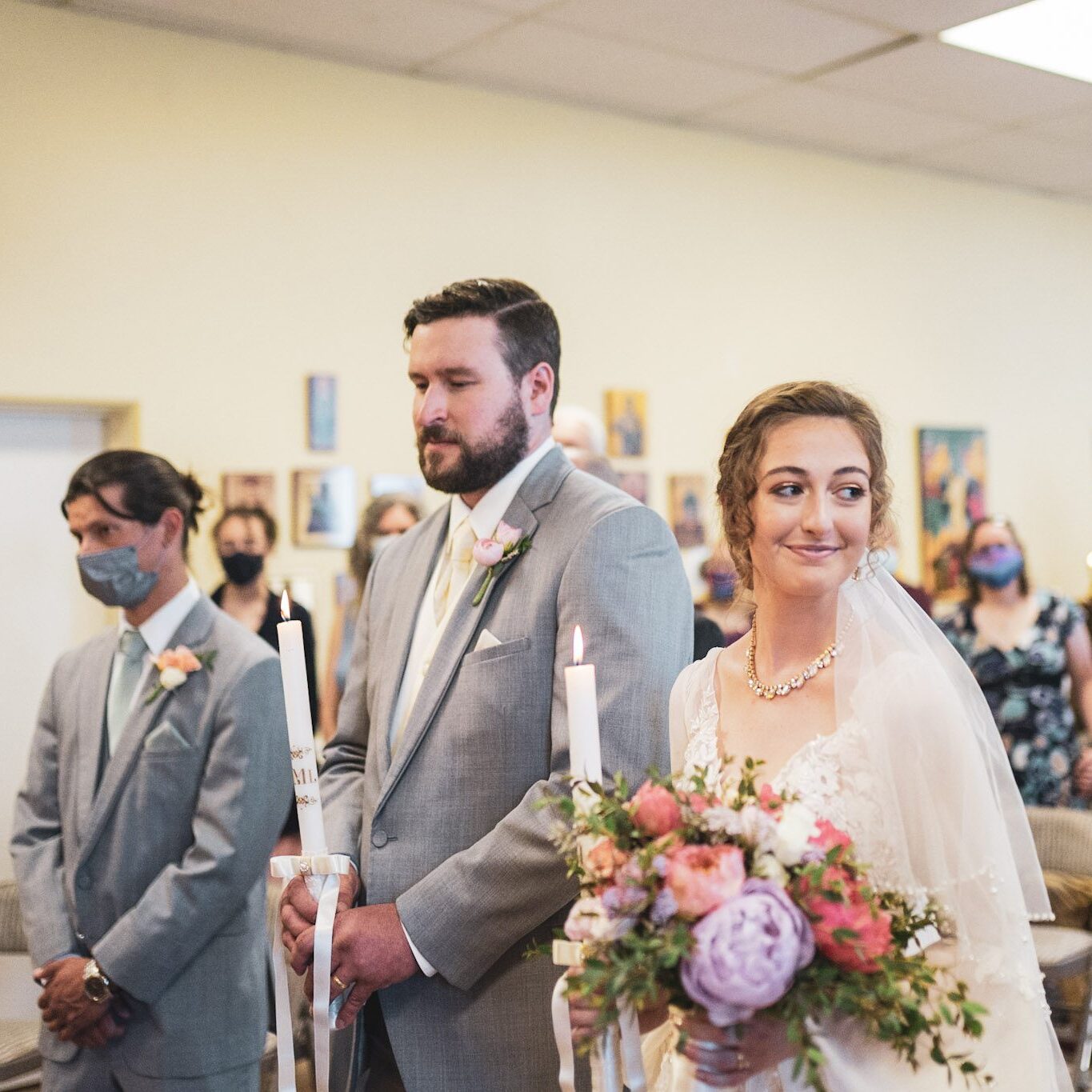
In the theology of the Orthodox Church man is made in the Image of the Most-holy Trinity, and, except in certain special cases (such as monasticism, for example), he is not intended by God to live alone, but in a family situation. Just as God blessed the first humans, Adam and Eve, to live as a family, to be fruitful and multiply, so too the Church blesses the union of a man and a woman. Marriage, however, is not a state of nature, but is rather a state of grace, and married life is a special vocation (no less than the special calling of monasticism), requiring a gift or charism from the Holy Spirit this gift being conferred in the Sacrament of Holy Matrimony.
That Holy Matrimony has divine sanction comes no less from the words of the Lord Himself, Who says: Have you not read that He Who made them from the beginning made them male and female, and said, ‘For this reason a man shall leave his father and mother and be joined to his wife, and the two shall become one flesh’ [Gen. 2:24]. So they are no longer two but one flesh. What therefore God has joined together, let not man put asunder (Matt. 19:5-6).
The Holy Apostle Paul sees this mystical union of husband and wife as reflecting the mystical union of Christ with His Church: Wives, be subject to your husbands, as to the Lord. For the husband is the head of the wife as Christ is the head of the Church, His body…. Husbands, love your wives, as Christ loved the Church and gave Himself up for her…. Even so husbands should love their wives as their own bodies. He who loves his wife loves himself. For no man ever hates his own flesh, but nourishes and cherishes it, as Christ does the Church, because we are members of His body…. This mystery is a profound one, and I am saying that it refers to Christ and the Church… (Eph. 5:22-25, 28-30, 32).
The Sacrament of Holy Matrimony consists of two parts: Betrothal and Crowning. The Betrothal is, in some way, the civil act, sanctified by the blessing of the Church. It sanctifies the intention of two persons to enter into the martial union and reflects Old Testament customs, when on those who had expressed their intentions to marry, rings were placed. This exchange of rings in the Office of Betrothal is an outward token that the two partners join in marriage of their own free will and consent, for without free consent on both sides there can be no Sacrament of Christian marriage.
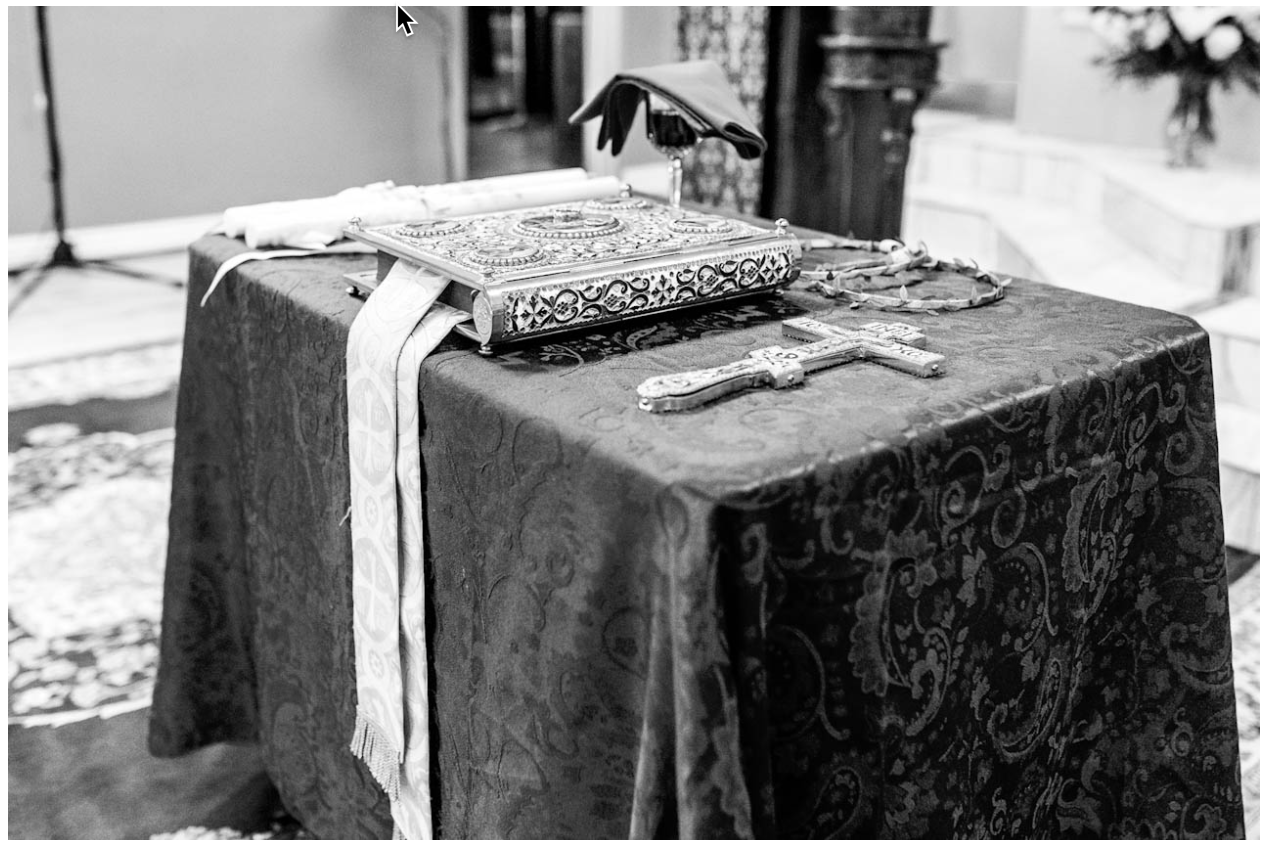
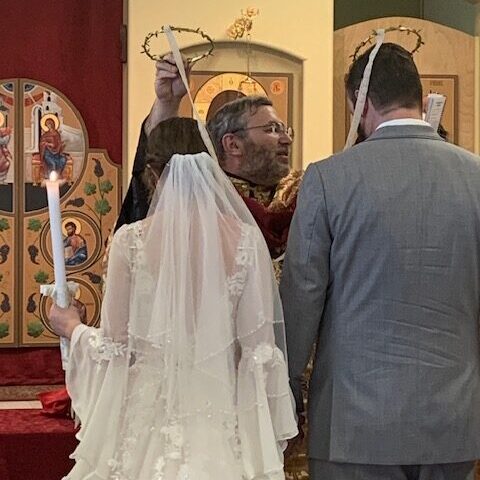
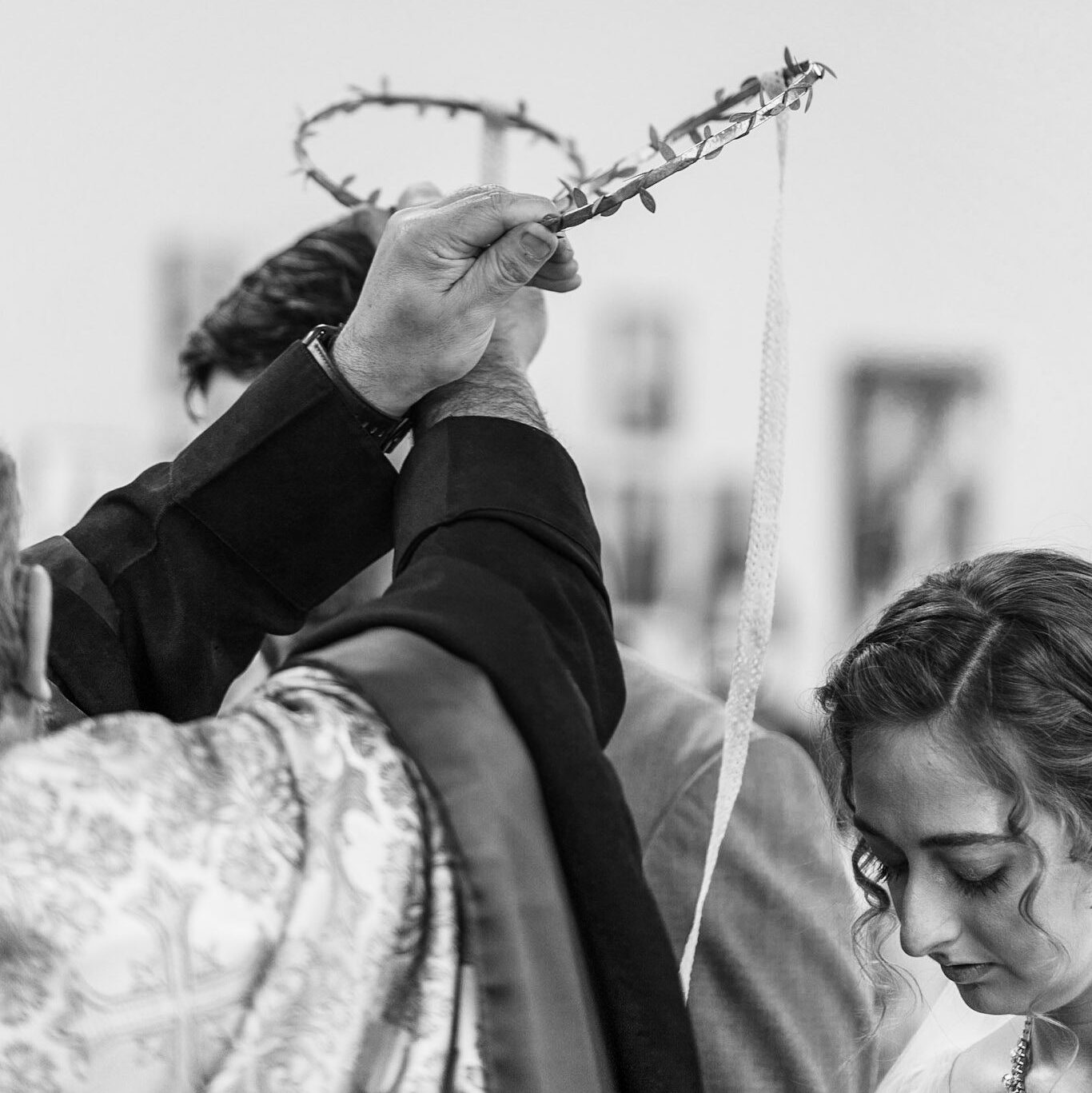
The Office of Crowning also contains an Old Testament element in the crowning itself, which reflects the ancient practice of placing crowns on the heads of the betrothed. This is the outward and visible sign of the Sacrament, signifying the special grace of the Holy Spirit received by the couple. These crowns are crowns of joy and martyrdom joy for the new union and martyrdom since every true marriage involves immeasurable self-sacrifice on both sides.
In the Greek Churches, the crowns are usually made of leaves and flowers, while in the Russian Church they are usually made of silver or gold. Customarily in the Russian Church the crowns are held over the couples’ heads by the best man and maid of honor, but in many places (as in Romania, for example) they are actually worn by the bride and groom.
The Gospel for the day contains the account of the Wedding in Cana in Galilee (John 2:1-11). The blessing, given by God to man in Paradise was renewed by Christ in the New Testament, when, at the beginning of His ministry, He performed the miracle of changing water into wine. Thus, at the end of the Marriage Service the newly-married couple drink from the same cup of wine, which recalls this miracle of Our Lord. The common cup here is also a symbol that henceforth they will share a common life with one another.
When Weddings are Not to be Celebrated.
There are certain times during the year when the Sacrament of Holy Matrimony may not be celebrated. These are:
1. On the Eves of Wednesdays and Fridays throughout the year.
2. On the Eves of Sundays throughout the year.
3. On the Eves of the Twelve Great Feasts, patronal feasts of the parish or monastery, and other great feasts.
4. In all of the Fasts (Great Lent, Apostles’ Fast, Dormition Fast and Nativity Fast).
5. From the Nativity of Christ (Dec. 25) through the Synaxis of the Baptist (Jan. 7).
6. During the course of Cheesefare Week (from Sunday of Meatfare through the Sunday of Cheesefare).
7. During the course of Bright Week.
8. On the Day and the Eve of the Beheading of the Baptist (Aug. 29) and the Elevation of the Cross (Sept. 14).
Excerpt taken from “These Truths We Hold – The Holy Orthodox Church: Her Life and Teachings”. Compiled and Edited by A Monk of St. Tikhon’s Monastery. Copyright 1986 by the St. Tikhon’s Seminary Press, South Canaan, Pennsylvania 18459.
Additional Resources:
Marriage in the Orthodox Church
“But from the beginning of the creation, God made them male and female. For this reason a man shall leave his father and mother and be joined to his wife, and the two shall become one flesh; so then they are no longer two, but one
flesh. Therefore what God has joined together, let not man separate.”
(Mark 10:6-9)
Blessed is every one who fears the Lord, who walks in his ways! You shall eat the fruit of the labor of your hands; you shall be happy, and it shall be well with you. Your wife will be like a fruitful vine within your house; your
children will be like olive shoots around your table. Lo, thus shall the man be blessed who fears the Lord. The Lord bless you from Zion! May you see the prosperity of Jerusalem all the days of your life! May you see your children’s
children! Peace be upon Israel!
(Psalm 128)
Bind them closely in oneness of mind, crown them unto one flesh and grant unto them the fruit of the womb, the pleasure of bearing good children.
(The Wedding Service)
Epistle Reading: Ephesians 5:22-33
Wives, submit to your own husbands, as to the Lord. For the husband is head of the wife, as also Christ is head of the church; and He is the Savior of the body. Therefore, just as the church is subject to Christ, so let the wives be to their own husbands in everything. Husbands, love your wives, just as Christ also loved the church and gave Himself for her, that He might sanctify and cleanse her with the washing of water by the word, that He might present her to Himself a glorious church, not having spot or wrinkle or any such thing, but that she should be holy and without blemish. So husbands ought to love their own wives as their own bodies; he who loves his wife loves himself. For no one ever hated his own flesh, but nourishes and cherishes it, just as the Lord does the church. For we are members of His body, of His flesh and of His bones. “For this reason a man shall leave his father and mother and be joined to his wife, and the two shall become one flesh. This is a great mystery, but I speak concerning Christ and the church. Nevertheless let each one of you in particular so love his own wife as himself, and let the wife see that she respects her husband.
Gospel Reading: John 2:1-11
On the third day there was a wedding in Cana of Galilee, and the mother of Jesus was there. Now both Jesus and His disciples were invited to the wedding. And when they ran out of wine, the mother of Jesus said to Him, “They have no wine.” Jesus said to her, “Woman, what does your concern have to do with Me? My hour has not yet come.” His mother said to the servants, “Whatever He says to you, do it.” Now there were set there six waterpots of stone, according to the manner of purification of the Jews, containing twenty or thirty gallons apiece. Jesus said to them, “Fill the waterpots with water.” And they filled them up to the brim. And he said to them, “Draw some out now, and take it to the master of the feast.” And they took it. When the master of the feast had tasted the water that was made wine, and did not know where it came from (but the servants who had drawn the water knew), the master of the feast called the bridegroom. And he said to him, “Every man at the beginning sets out the good wine, and when the guests have well drunk, then the inferior. You have kept the good wine until now!” This beginning of signs Jesus did in Cana of Galilee, and manifested His glory; and His disciples believed in Him.